Cine s-a întâlnit cu Elisabeta de Neuwied?
Eduard al VII-lea al Regatului Unit datează Elisabeta de Neuwied de la ? până la ?. Diferența de vârstă a fost de 2 ani, 1 luni și 20 zile.
Elisabeta de Neuwied
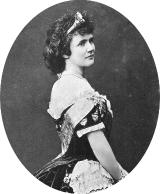
Elisabeta a României, pseudonim literar Carmen Sylva, nume complet Elisabeth Pauline Ottilie Luise zu Wied; n. 29 decembrie 1843, Neuwied, din Ducatul Nassau — d. 18 februarie/2 martie 1916, București, din Vechiul Regat) a fost doamna, apoi regina României în timpul domniei soțului ei, Carol I al României. Patroană a artelor, fondatoare a unor instituții caritabile, poetă, eseistă și prozatoare.
Elisabeta era fiica lui Hermann, principe de Wied, un ministat german absorbit de Ducatul Nassau. În 1869 principesa Elisabeta de Wied s-a căsătorit cu domnitorul Carol I al României, devenind în 1881 prima regină a României, în urma recunoașterii țării drept regat atât de Poarta Otomană, cât și de marile Puteri Europene după Războiul de Independență a României de la 1877.
Citește mai mult...Eduard al VII-lea al Regatului Unit
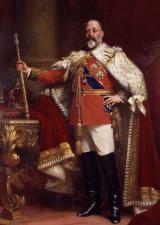
Edward VII (Albert Edward; 9 November 1841 – 6 May 1910) was King of the United Kingdom and the British Dominions, and Emperor of India, from 22 January 1901 until his death in 1910.
The second child and eldest son of Queen Victoria and Prince Albert of Saxe-Coburg and Gotha, Edward, nicknamed "Bertie", was Prince of Wales and heir apparent to the British throne for almost 60 years. During his mother's long reign, he was largely excluded from political influence and came to personify the leisured elite. He married Princess Alexandra of Denmark in 1863; the couple had six children. As Prince of Wales, Edward travelled throughout Britain performing ceremonial public duties and represented Britain on visits abroad. His tours of North America in 1860 and of the Indian subcontinent in 1875 proved popular successes. Despite this public approval, his reputation as a playboy prince soured his relationship with his mother.
Edward inherited the throne on his mother's death in 1901. He played a role in the modernisation of the British Home Fleet and the reorganisation of the British Army after the Second Boer War of 1899 to 1902. He re-instituted traditional ceremonies as public displays and broadened the range of people with whom royalty socialised. He fostered good relations between Britain and other European countries, especially France, for which he was popularly called "Peacemaker", but his relationship with his nephew, German Emperor Wilhelm II, was poor.
The Edwardian era, which covered Edward's reign and was named after him, coincided with the start of a new century and heralded significant changes in technology and society, including steam turbine propulsion and the rise of socialism. Edward died in the midst of a constitutional crisis that was resolved by the Parliament Act 1911, which restricted the power of the unelected House of Lords. Edward was succeeded as king by his only surviving son, George V.
Citește mai mult...