Cine s-a întâlnit cu Augustus II the Strong?
Erdmuta Zofia von Dieskau datează Augustus II the Strong de la ? până la ?. Diferența de vârstă a fost de 27 ani, 9 luni și 13 zile.
Maria Aurora von Königsmarck datează Augustus II the Strong de la ? până la ?. Diferența de vârstă a fost de 8 ani, 0 luni și 14 zile.
Henriette Rénard datează Augustus II the Strong de la ? până la ?.
Anna Constantia von Brockdorff datează Augustus II the Strong de la ? până la ?. Diferența de vârstă a fost de 10 ani, 5 luni și 5 zile.
Urszula Katarzyna Bokum datează Augustus II the Strong de la ? până la ?. Diferența de vârstă a fost de 9 ani, 11 luni și 22 zile.
Marianna Denhoff datează Augustus II the Strong de la ? până la ?.
Emerencjanna Pociej datează Augustus II the Strong de la ? până la ?.
Maria Aurora von Spiegel datează Augustus II the Strong de la ? până la ?.
Henrietta von Osterhausen datează Augustus II the Strong de la ? până la ?.
Angélique Debargues datează Augustus II the Strong de la ? până la ?.
Zofia Eleonora Klengel datează Augustus II the Strong de la ? până la ?.
Anna Aloysia Maximiliane von Lamberg datează Augustus II the Strong de la până la .
Augustus II the Strong

Augustus II the Strong (12 May 1670 – 1 February 1733), was Elector of Saxony as Frederick Augustus I (German: Friedrich August I) from 1694 as well as King of Poland and Grand Duke of Lithuania from 1697 to 1706 and from 1709 until his death in 1733. He belonged to the Albertine branch of the House of Wettin.
Augustus' great physical strength earned him the nicknames "the Strong", "the Saxon Hercules" and "Iron-Hand". He liked to show that he lived up to his name by breaking horseshoes with his bare hands and engaging in fox tossing by holding the end of his sling with just one finger while two of the strongest men in his court held the other end. He is also notable for fathering a very large number of children, with contemporary sources claiming a total of between 360 and 380.
In order to be elected king of the Polish–Lithuanian Commonwealth, Augustus converted to Catholicism. As a Catholic, he received the Order of the Golden Fleece from the Holy Roman Emperor and established the Order of the White Eagle, Poland's highest distinction. As elector of Saxony, he is perhaps best remembered as a patron of the arts and architecture. He transformed the Saxon capital of Dresden into a major cultural centre, attracting artists from across Europe to his court. Augustus also amassed an impressive art collection and built lavish baroque palaces in Dresden and Warsaw. In 1711 he served as the Imperial vicar of the Holy Roman Empire.
His reign brought about many troubles to Poland. He led the Polish–Lithuanian Commonwealth in the Great Northern War, which allowed the Russian Empire to strengthen its influence in Europe, especially within Poland. His main pursuit was bolstering royal power in the Commonwealth, characterized by broad decentralization in comparison with other European monarchies. In order to reduce the autonomy of the Commonwealth's subjects he used foreign powers, leading to destabilization of the country. Augustus ruled Poland with a 3-year interruption between 1706 and 1709; in 1704 the Swedes installed nobleman Stanisław Leszczyński as king, who officially reigned from 1706 to 1709 and then after Augustus' death in 1733, which sparked the War of the Polish Succession.
Augustus' body was buried in Poland's royal Wawel Cathedral in Kraków, but his heart rests in the Dresden Cathedral. His only legitimate son, Augustus III of Poland, became king in 1733.
Citește mai mult...Erdmuta Zofia von Dieskau
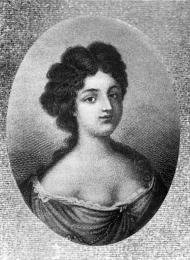
Erdmuta Zofia von Dieskau (1698-1767), was a Polish aristocrat. She replaced Marianna Denhoff as the mistress of Augustus II the Strong in 1719 and was replaced by Henrietta von Osterhausen in 1720.
Citește mai mult...Augustus II the Strong
Maria Aurora von Königsmarck
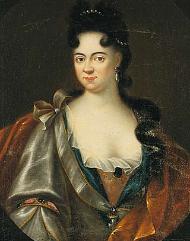
Countess Maria Aurora von Königsmarck (Swedish: Aurora Königsmarck) (28 April 1662 – 16 February 1728) was a Swedish and German noblewoman of Brandenburg extraction and mistress of Augustus the Strong, Elector of Saxony and King of Poland.
Citește mai mult...Augustus II the Strong
Henriette Rénard

Ana Katharina (Henriette) Rénard (1685 – 26 May 1721), was a mistress of Augustus the Strong, King of Poland and Elector of Saxony and mother of his daughter, the later Countess Anna Karolina Orzelska.
Citește mai mult...Augustus II the Strong
Anna Constantia von Brockdorff

Anna Constantia von Brockdorff (17 October 1680 – 31 March 1765), later the Countess of Cosel, was a German lady-in-waiting and noblewoman, and mistress of Augustus the Strong, King of Poland and Elector of Saxony, in 1706–1713. Eventually he turned against her and exiled her to Saxony, where she died after 49 years of internal exile.
Citește mai mult...Augustus II the Strong
Urszula Katarzyna Bokum

Ursula Katharina of Altenbockum, divorced Princess Lubomirska, married Duchess von Württemberg-Winnental (Polish: Urszula Katarzyna Lubomirska z domu Bokum; 25 November 1680 – 4 May 1743), later Imperial Princess of Teschen (German: Reichsfürstin von Teschen), was a Polish-German noblewoman and mistress of Augustus II the Strong, King of Poland and Elector of Saxony, in 1700-1705. In 1722 she married Prince Frederick Louis of Württemberg-Winnental.
Citește mai mult...Augustus II the Strong
Marianna Denhoff

Augustus II the Strong
Emerencjanna Pociej

Augustus II the Strong
Maria Aurora von Spiegel

Maria Aurora von Spiegel, born Fatima (born before 1686 – fl 1733), also referred to as Fatime, Fatima Kariman or Fatima von Kariman, was the Ottoman Turkish mistress of Augustus II the Strong of Poland and Lithuania. Fatima was one of the many Turkish captives during the Battle of Buda. She was brought to the royal courts of Europe, including Sweden, Polish-Lithuanian Commonwealth, and Saxony, and trained as a lady-in-waiting.
Citește mai mult...Augustus II the Strong
Henrietta von Osterhausen

Henrietta von Osterhausen (died 6 November 1727, Dresden), was a German-Polish aristocrat. She is known as the mistress of Augustus II the Strong.
She was a lady-in-waiting to the daughter-in-law of August, Maria Josepha of Austria.
She replaced Erdmuta Zofia von Dieskau as royal mistress in 1720. When the affair was over, Maria Josepha suggested that she become a nun. She did live for the Ursuline convent in Prague, but stayed there only as a guest for a couple of months.
She married Albrecht Zygmunt von Zeigut-Stanisławski on 22 February 1724.
Citește mai mult...Augustus II the Strong
Angélique Debargues

Angélique Debargues, Angélique Duparc (zm. po 1724) – francuska tancerka, primabalerina, metresa króla polskiego i elektora Saksonii Augusta II Mocnego.
Citește mai mult...Augustus II the Strong
Zofia Eleonora Klengel
Zofia Eleonora Klengel (1674-1755), was a German aristocrat. She is known as the first known mistress of Augustus II the Strong in 1692–1695.
Citește mai mult...Augustus II the Strong
Anna Aloysia Maximiliane von Lamberg
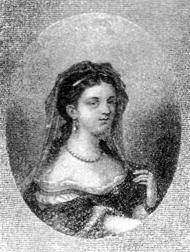
Anna Aloysia Maximiliane Louise von Lamberg (1676 – 28 June 1738), also known as Countess Esterle, was an Austrian countess who was successively the mistress of Augustus II the Strong, King of Poland, and Aleksander Benedykt Sobieski.
Citește mai mult...