Cine s-a întâlnit cu Cleopatra VII?
Julius Caesar datează Cleopatra VII de la ? până la ?. Diferența de vârstă a fost de 30 ani, 6 luni și 10 zile.
Gnaeus Pompeius Magnus datează Cleopatra VII de la ? până la ?.
Cleopatra VII
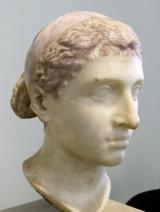
Cleopatra VII Thea Philopator (Koine Greek: Κλεοπάτρα Θεά Φιλοπάτωρ, lit. 'Cleopatra father-loving goddess'; 70/69 BC – 10 or 12 August 30 BC) was Queen of the Ptolemaic Kingdom of Egypt from 51 to 30 BC, and the last active Hellenistic pharaoh. A member of the Ptolemaic dynasty, she was a descendant of its founder Ptolemy I Soter, a Macedonian Greek general and companion of Alexander the Great. Her first language was Koine Greek, and she is the only Ptolemaic ruler known to have learned the Egyptian language, among several others. After her death, Egypt became a province of the Roman Empire, marking the end of the Hellenistic period in the Mediterranean, which had begun during the reign of Alexander (336–323 BC).
Born in Alexandria, Cleopatra was the daughter of Ptolemy XII Auletes, who named her his heir before his death in 51 BC. Cleopatra began her reign alongside her brother Ptolemy XIII, but falling-out between them led to a civil war. Roman statesman Pompey fled to Egypt after losing the 48 BC Battle of Pharsalus against his rival Julius Caesar, the Roman dictator, in Caesar's civil war. Pompey had been a political ally of Ptolemy XII, but Ptolemy XIII had him ambushed and killed before Caesar arrived and occupied Alexandria. Caesar then attempted to reconcile the rival Ptolemaic siblings, but Ptolemy XIII's forces besieged Cleopatra and Caesar at the palace. Shortly after the siege was lifted by reinforcements, Ptolemy XIII died in the Battle of the Nile. Caesar declared Cleopatra and her brother Ptolemy XIV joint rulers, and maintained a private affair with Cleopatra which produced a son, Caesarion. Cleopatra traveled to Rome as a client queen in 46 and 44 BC, where she stayed at Caesar's villa. After Caesar's assassination, followed shortly afterwards by the sudden death of Ptolemy XIV (possibly murdered on Cleopatra's order), she named Caesarion co-ruler as Ptolemy XV.
In the Liberators' civil war of 43–42 BC, Cleopatra sided with the Roman Second Triumvirate formed by Caesar's heir Octavian, Mark Antony, and Marcus Aemilius Lepidus. After their meeting at Tarsos in 41 BC, the queen had an affair with Antony which produced three children. Antony became increasingly reliant on Cleopatra for both funding and military aid during his invasions of the Parthian Empire and the Kingdom of Armenia. The Donations of Alexandria declared their children rulers over various territories under Antony's authority. Octavian portrayed this event as an act of treason, forced Antony's allies in the Roman Senate to flee Rome in 32 BC, and declared war on Cleopatra. After defeating Antony and Cleopatra's naval fleet at the 31 BC Battle of Actium, Octavian's forces invaded Egypt in 30 BC and defeated Antony, leading to Antony's suicide. After his death, Cleopatra reportedly killed herself, probably by poisoning, to avoid being publicly displayed by Octavian in Roman triumphal procession.
Cleopatra's legacy survives in ancient and modern works of art. Roman historiography and Latin poetry produced a generally critical view of the queen that pervaded later Medieval and Renaissance literature. In the visual arts, her ancient depictions include Roman busts, paintings, and sculptures, cameo carvings and glass, Ptolemaic and Roman coinage, and reliefs. In Renaissance and Baroque art, she was the subject of many works including operas, paintings, poetry, sculptures, and theatrical dramas. She has become a pop culture icon of Egyptomania since the Victorian era, and in modern times, Cleopatra has appeared in the applied and fine arts, burlesque satire, Hollywood films, and brand images for commercial products.
Citește mai mult...Julius Caesar

Gaius Iulius Caesar (în limba latină IMP•C•IVLIVS•CAESAR•DIVVS1, în română cunoscut și ca Iulius Cezar; n. iulie 100 î.Hr., Roma, Republica Romană – d. , Teatrul lui Pompeius(d), Republica Romană) a fost un conducător politic și general roman și una dintre cele mai influente și mai controversate personalități din istorie. Rolul său a fost esențial în instaurarea dictaturii la Roma, lichidarea democrației Republicii și instaurarea Imperiului Roman. A provocat războaie de cucerire fără acordul senatului roman. Cucerirea Galiei, plănuită de Cezar, a inclus sub dominația romană teritorii până la Oceanul Atlantic. În anul 55 î.Hr. Cezar a lansat prima invazie romană în Marea Britanie.
Cezar a ieșit învingător într-un război civil, devenind dictator al lumii romane, și a inițiat o vastă acțiune de reformare a societății romane și a guvernării acesteia. El s-a proclamat dictator pe viață și a centralizat puternic guvernarea statului slăbit din cauza războiului civil pornit tot de Cezar. Prietenul lui Cezar, Marcus Brutus, complotează pentru a-l asasina, în speranța de a salva republica. Dramatica asasinare din Idele lui Marte a fost catalizatorul unui al doilea război civil, între cezari (Octavianus, Marcus Antonius, Lepidus) și republicani (între alții, Brutus, Cassius și Cicero). Conflictul s-a încheiat cu victoria cezarilor în Bătălia de la Philippi și stabilirea formală a unui al Doilea Triumvirat, în care Octavianus, Marcus Antonius și Lepidus au preluat împreună controlul asupra Romei. Tensiunile iscate între Octavianus și Marcus Antonius au condus la un nou război civil, culminând cu înfrângerea lui Marcus Antonius în Bătălia de la Actium. Octavianus a ajuns liderul absolut al lumii romane.
Perioada de războaie civile a transformat Republica Romană în Imperiul Roman, cu nepotul de bunic, în același timp și fiu adoptiv al lui Cezar, Octavian, cunoscut mai târziu ca Cezar August, instalându-se ca primul împărat.
Campaniile militare ale lui Cezar sunt cunoscute în detaliu prin prisma propriilor sale consemnări: Commentarii de Bello Gallico. Multe detalii ale vieții sale au fost relatate mai târziu de istorici, precum Suetonius, Plutarh și Cassius Dio.
Citește mai mult...Cleopatra VII
Gnaeus Pompeius Magnus

Cneo Pompeyo el Joven (75 a. C. - 45 a. C.), político y general romano de finales de la etapa republicana (siglo I a. C.).
Citește mai mult...