Cine s-a întâlnit cu Dorothea de Curlanda?
Theobald Piscatory datează Dorothea de Curlanda de la ? până la ?. Diferența de vârstă a fost de 6 ani, 1 luni și 9 zile.
Charles-Maurice de Talleyrand-Périgord datează Dorothea de Curlanda de la ? până la ?. Diferența de vârstă a fost de 39 ani, 6 luni și 19 zile.
Dorothea de Curlanda

Dorothea von Biron, Prințesă de Curlanda, Ducesă de Dino, Talleyrand și Sagan, cunoscută ca Dorothée de Courlande sau Dorothé de Dino (21 august 1793 – 19 septembrie 1862), a fost nobilă germană. Mama ei a fost Dorothea von Medem, Ducesă de Curlanda și e posbil ca adevăratul ei tată să fi fost politicianul polonez Aleksander Batowski. O perioadă lungă de timp ea l-a însoțit pe omul de stat francez Charles Maurice de Talleyrand-Périgord, în timp ce ea a fost soția nepotului acestuia, Edmond de Talleyrand-Périgord.
Citește mai mult...Theobald Piscatory

Théobald Émile Arcambal-Piscatory (6 April 1800 in Paris – 18 November 1870 in Paris) was a French statesman and diplomat.
Citește mai mult...Dorothea de Curlanda
Charles-Maurice de Talleyrand-Périgord
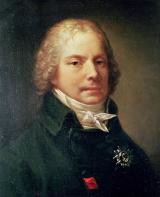
Charles-Maurice de Talleyrand-Périgord (; French: [ʃaʁl mɔʁis də tal(ɛ)ʁɑ̃ peʁiɡɔʁ, moʁ-]; 2 February 1754 – 17 May 1838), 1st Prince of Benevento, then Prince of Talleyrand, was a French secularized clergyman, statesman, and leading diplomat. After studying theology, he became Agent-General of the Clergy in 1780. In 1789, just before the French Revolution, he became Bishop of Autun. He worked at the highest levels of successive French governments, most commonly as foreign minister or in some other diplomatic capacity. He served as the French Diplomat in the Congress of Vienna. His career spanned the regimes of Louis XVI, the years of the French Revolution, Napoleon, Louis XVIII, Charles X, and Louis Philippe I. Those Talleyrand served often distrusted him but found him extremely useful. The name "Talleyrand" has become a byword for crafty and cynical diplomacy.
Talleyrand was Napoleon's chief diplomat during the years when French military victories brought one European state after another under French hegemony. Most of the time, he worked for peace so as to consolidate France's gains. He succeeded in obtaining peace with Austria through the 1801 Treaty of Lunéville and with Britain in the 1802 Treaty of Amiens. He could not prevent the renewal of war in 1803 but by 1805 he opposed his emperor's renewed wars against Austria, Prussia, and Russia. He resigned as foreign minister in August 1807, but retained the trust of Napoleon. He conspired to undermine the emperor's plans through secret dealings with Tsar Alexander I of Russia and the Austrian minister Klemens von Metternich. Talleyrand sought a negotiated secure peace so as to perpetuate the gains of the French Revolution. Napoleon rejected peace; when he fell in 1814, Talleyrand supported the Bourbon Restoration decided by the Allies. He played a major role at the Congress of Vienna in 1814–1815, where he negotiated a favorable settlement for France and played a role in unwinding the Napoleonic Wars.
Talleyrand polarizes opinion. Some regard him as one of the most versatile, skilled, and influential diplomats in European history, while others believe that he was a traitor, betraying in turn the ancien régime, the French Revolution, and Napoleon.
Citește mai mult...