Cine s-a întâlnit cu Henric al III-lea al Franței?
Françoise Babou de La Bourdaisière datează Henric al III-lea al Franței de la ? până la ?.
Veronica Franco datează Henric al III-lea al Franței de la ? până la ?. Diferența de vârstă a fost de 5 ani, 5 luni și 25 zile.
La Belle Châteauneuf datează Henric al III-lea al Franței de la ? până la ?.
Jeanne de Laval datează Henric al III-lea al Franței de la ? până la ?. Diferența de vârstă a fost de 2 ani, 0 luni și 6 zile.
Henric al III-lea al Franței

Henric al III-lea (în franceză Henri III, în poloneză Henryk) (n. , Fontainebleau, Île-de-France, Franța – d. , Saint-Cloud, Île-de-France, Franța) din dinastia Valois a fost rege al Franței între 1574 - 1589 și Rege al Poloniei între 1573 și 1574 cu titlul de Henric de Valois.
Citește mai mult...Françoise Babou de La Bourdaisière
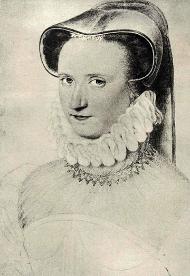
Françoise Babou de La Bourdaisière, Marquise of Coeuvres, vicomtess of Soissons and of Bercy (French pronunciation: [fʁɑ̃swaz babu də la buʁdezjɛʁ]; 1542 – 9 June 1592) was the mistress of a favourite of the king, Du Guast. She married Antoine d'Estrées in 1558, and they were the parents of Gabrielle d'Estrées—mistress of King Henry IV of France.
Citește mai mult...Henric al III-lea al Franței
Veronica Franco

Veronica Franco (c. 1546–1591) was an Italian poet and courtesan in 16th-century Venice. She is known for her notable clientele, feminist advocacy, literary contributions, and philanthropy. Her humanist education and cultural contributions influenced the roles of courtesans in the late Venetian Renaissance.
In her notable works, Capitoli in Terze rime and Lettere familiari a diversi ("Familiar Letters to Various People"), Franco uses perceived virtue, reason, and fairness to advise male patricians and other associates. She exercised greater autonomy in her authorship than any other traditional Venetian woman due to her established reputation and influence.
Citește mai mult...Henric al III-lea al Franței
La Belle Châteauneuf

"La Belle Châteauneuf" (fl. 16th C.) was the name popularly given to Renée de Rieux, daughter of Jean de Rieux, seigneur de Châteauneuf, who was descended from one of the greatest families of Brittany. The dates of her birth and death are unknown.
She was maid of honour to France's queen mother, Catherine de' Medici, and a member of her notorious "Flying Squadron" (L'escadron volant). She inspired an ardent passion in the duke of Anjou, brother of Charles IX. This intrigue deterred the duke from agreeing to an arranged marriage with Elizabeth I of England; but he soon abandoned la Châteauneuf for Marie of Cleves (1571). The court then wished to find a husband for her, whose singular beauty gave her an influence which the queen-mother feared, and matches were in turn suggested with the Voivode of Transylvania, the Earl of Leicester; with Antoine Duprat, provost of Paris; and with the Count of Brienne, all of which came to nothing.
Ultimately, Renée was banished from the court on the ground that she had been lacking in respect toward the queen, Louise of Lorraine. She married a Florentine named Antinotti, whom she stabbed in a fit of jealousy (1577). She remarried, her husband being Philip Altoviti, who in 1586 was killed in a duel by the Grand Prior Henri d'Angoulême, who was himself mortally wounded.
Citește mai mult...Henric al III-lea al Franței
Jeanne de Laval

Jeanne de Laval (also Madame de Sennecterre) (1549–1586), was a French noblewoman. She was the mistress of Henry III of France. She was a lady-in-waiting to the queen, Louise of Lorraine.
Citește mai mult...