Cine s-a întâlnit cu Marie Antoinette?
Axel von Fersen the Younger datează Marie Antoinette de la ? până la ?. Diferența de vârstă a fost de 0 ani, 1 luni și 29 zile.
Marie Antoinette

Marie Antoinette (Marie Antoinette Josèphe Jeanne, born Maria Antonia Josefa Johanna; 2 November 1755 – 16 October 1793) was Queen of France as the wife of Louis XVI from 10 May 1774 until the abolition of the monarchy in 1792. She was beheaded in 1793, during the Reign of Terror, a period of political violence in the French Revolution.
Marie was born an Austrian archduchess, to the house of Habsburg-Lorraine. She was the 15th child of Maria Theresa and her husband Francis I, Holy Roman Emperor, and the couple's last daughter. In 1769, Marie was betrothed to the dauphin of France, Louis-Auguste, as part of a move to strengthen the Franco–German alliance. She married Louis in 1770, when she was 14 and he was 15, becoming Dauphine of France. In 1774, Louis-Auguste inherited the French throne as Louis XVI, becoming King of France, and Marie Queen.
As queen, Marie Antoinette became increasingly a target of criticism by opponents of the domestic and foreign policies of Louis XVI and those opposed to the monarchy in general. The French libelles accused her of being profligate, promiscuous, having illegitimate children, and harboring sympathies for France's perceived enemies, including her native Austria. She was falsely accused of defrauding the Crown's jewelers in the Affair of the Diamond Necklace, but the accusations still damaged her reputation. During the French Revolution, she became known as Madame Déficit because the country's financial crisis was blamed on her lavish spending and her opposition to social and financial reforms proposed by Anne Robert Jacques Turgot and Jacques Necker.
Several events were linked to Marie Antoinette during the Revolution after the government placed the royal family under house arrest in the Tuileries Palace in October 1789. The June 1791 attempted flight to Varennes and her role in the War of the First Coalition were immensely damaging to her image among French citizens. On 10 August 1792, the attack on the Tuileries forced the royal family to take refuge at the Legislative Assembly, and they were imprisoned in the Temple Prison on 13 August 1792. On 21 September 1792, France was declared a republic and the monarchy was abolished. Louis XVI was executed by guillotine on 21 January 1793. Moved to the Conciergerie, Marie Antoinette's trial began on 14 October 1793; two days later, she was convicted by the Revolutionary Tribunal of high treason and executed by guillotine on 16 October 1793 at the Place de la Révolution.
Citește mai mult...Axel von Fersen the Younger
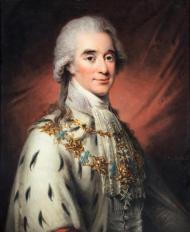
Hans Axel von Fersen (Swedish: [hɑːns ˈǎksɛl fɔn ˈfæ̌ʂːɛn]; 4 September 1755 – 20 June 1810), also known as Axel von Fersen the Younger and as Axel de Fersen in France, was a Swedish count, military officer, courtier, ambassador, Marshal and Lord of the Realm. He gained international renown for his close association with Queen Marie Antoinette of France and his prominent involvement in the French Revolution.
Born into one of Sweden’s wealthiest and most influential noble families, von Fersen was raised in an environment shaped by French culture and courtly traditions. He received a thorough military education, travelled extensively throughout Europe, and served as an aide-de-camp in the French Army during the American Revolutionary War. He is most widely remembered for his close and often debated relationship with Marie Antoinette, which some historians believe developed into a romantic affair. Von Fersen became a trusted confidant of the French royal family and played a pivotal role in organizing and executing their ill-fated flight to Varennes in June 1791.
Following the outbreak of the French Revolution and the execution of the royal family, von Fersen continued to act as a diplomat on behalf of Kings Gustav III and Gustav IV Adolf of Sweden, working to preserve ties with the French monarchy and support its restoration. Returning to Sweden in the 1790s, he held several high-ranking positions, including Marshal of the Realm and Chancellor of Uppsala University. His life came to a violent end in June 1810, when he was killed by a lynch mob in Stockholm amid false rumors implicating him in the sudden death of Charles August, Crown Prince of Sweden. Subsequent investigations cleared him of all suspicion, and he was buried with honor. Von Fersen’s life—particularly his ties to Marie Antoinette—has been widely portrayed in historical and fictional works, including films, television series, and stage productions.
Citește mai mult...