Cine s-a întâlnit cu Paul Robeson?
Peggy Ashcroft datează Paul Robeson de la ? până la ?. Diferența de vârstă a fost de 9 ani, 8 luni și 13 zile.
Helen V. Rosen datează Paul Robeson de la ? până la ?.
Paul Robeson

Paul Leroy Robeson ( ROHB-sən; April 9, 1898 – January 23, 1976) was an American bass-baritone concert artist, actor, professional football player, and activist who became famous both for his cultural accomplishments and for his political stances.
In 1915, Robeson won an academic scholarship to Rutgers College in New Brunswick, New Jersey, where he was the only African-American student. While at Rutgers, he was twice named a consensus All-American in football and was elected class valedictorian. He earned his LL.B. from Columbia Law School while playing in the National Football League (NFL). After graduation, he became a figure in the Harlem Renaissance, with performances in Eugene O'Neill's The Emperor Jones and All God's Chillun Got Wings.
Robeson performed in Britain in the touring melodrama Voodoo in 1922, and in Emperor Jones in 1925. In 1928, he scored a major success in the London premiere of Show Boat. Living in London for several years with his wife Eslanda, Robeson continued to establish himself as a concert artist, and he starred in a London production of Othello, the first of three productions of the play over the course of his career. He also gained attention in Sanders of the River (1935) and in the film production of Show Boat (1936).
Robeson's political activities began with his involvement with unemployed workers and anti-imperialist students in Britain, and it continued with his support for the Republican cause during the Spanish Civil War, the Soviet Union and Joseph Stalin, and his involvement in the Council on African Affairs.
During the Second World War, Robeson initially opposed Allied war efforts and US entry into the conflict during the Molotov–Ribbentrop Pact, but he became a highly vocal supporter of the war efforts after the German Invasion of the Soviet Union. His history of supporting Soviet policies brought scrutiny from the Federal Bureau of Investigation (FBI). After the war, the Council on African Affairs was placed on the Attorney General's List of Subversive Organizations. Robeson was investigated during the McCarthy era. When he refused to recant his public advocacy for the Soviet Union, the U.S. State Department withdrew his passport, and his income plummeted. He moved to Harlem and published a periodical called Freedom, which was critical of United States policies, from 1950 to 1955. Robeson's right to travel was eventually restored as a result of the 1958 United States Supreme Court decision Kent v. Dulles.
Between 1925 and 1961, Robeson released recordings of about 270 songs. The first of these was the spiritual "Steal Away", backed with "Were You There", in 1925. Robeson's recorded repertoire spanned many styles, including Americana, popular standards, classical music, European folk songs, political songs, poetry, and spoken excerpts from plays.
Citește mai mult...Peggy Ashcroft
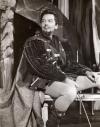
Edith Margaret Emily Ashcroft, DBE (n. 22 decembrie 1907 Marea Britanie – d. 14 iunie 1991), cunoscută sub numele de Peggy Ashcroft, a fost o actriță engleză cu o carieră de peste șaizeci de ani.
A câștigat un premiu Oscar pentru cea mai bună actriță.
A studiat la Central School of Drama, din Londra. În 1926, debutează la Repertory Theatre din Birmingham, iar în 1930, joacă rolul lui Desdemona în piesa Othello, regizată de Paul Robertson. Între anii 1932-1935, este considerată cea mai bună Julietă a secolului, datorită marilor roluri clasice pe care le-a avut. Are primul sezon la teatrul Old Vie din Londra și joacă rolurile principale în Fräulein Else și The Seagull, montate de Theodore Komisarjevsky. A mai avut și renumitele roluri ale lui Beatrice, în Much Ado About Nothing (1950) și Cleopatra (1953). A primit Medalia Regală în Norvegia (1954), pentru rolul Hedda în piesa Hedda Gabler. A interpretat rolul Ducesei de Malfi de două ori în 1944-1945 și apoi în 1960. A jucat și rolul Margaretei, în The Wars of the Roses, după Shakespeare. Triumfă în anul 1981 cu Royal Shakespeare Company, în piesa All`s Well That Ends Well.
A câștigat și un Oscar pentru filmul A Passage to India (1984).
A avut trei căsătorii: în 1929 cu Rupert Davies, în 1943 cu regizorul rus Theodore Komisarjevsky și în 1940 cu Jeremy Hutchinson, având cu acesta din urmă o fiică.
În 1962, un teatru din Croydon primește numele ei, iar în 1956 a primit distincția Ordinul Imperiului Britanic.
Citește mai mult...Paul Robeson